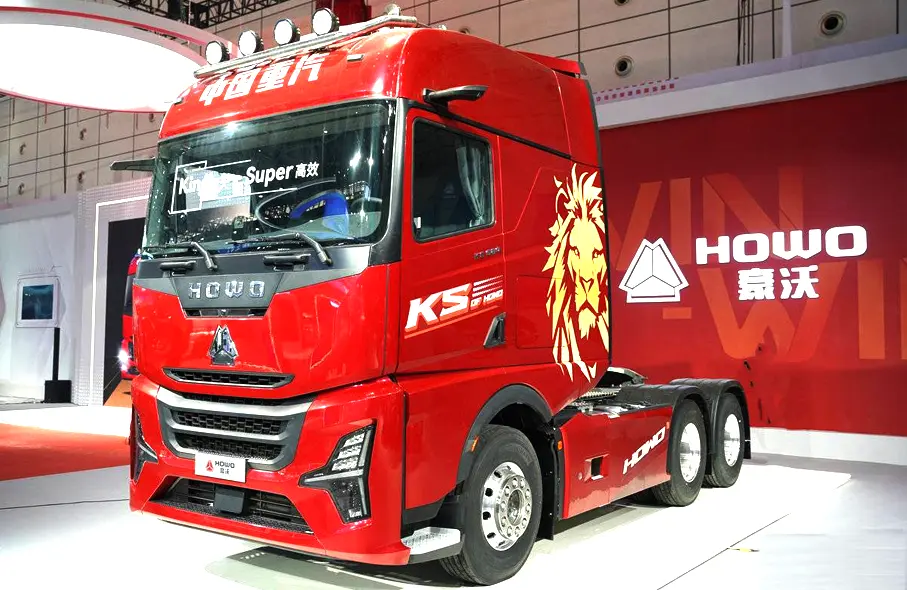
One set of data represents the overall picture: Data released by Cui Dongshu, Secretary-General of the China Passenger Car Association, on June 18th shows that, according to statistics from the National Financial Regulatory Commission’s compulsory traffic accident liability insurance data, domestic commercial vehicle sales reached 1.27 million units from January to May, a mere 1% increase year-on-year, almost stagnant.
The other set represents new energy vehicles: During the same period, 400,000 new energy commercial vehicles were registered with compulsory traffic accident liability insurance, a 40% year-on-year increase. In May alone, the penetration rate reached 39.3%, a significant increase of 13 percentage points compared to the same period in 2025.

These two sets of data together point to one fact: the growth in commercial vehicles is entirely driven by new energy vehicles, and the replacement of gasoline and natural gas vehicles by new energy vehicles is accelerating, faster than anyone anticipated.
More noteworthy is that at this crucial juncture of transition, the leader is not some kind of “new car-making force,” but a long-established state-owned enterprise with a 70-year history—China National Heavy Duty Truck Group (CNHTC).
In the fourth quarter of 2025, CNHTC only first entered the top three in monthly sales of new energy heavy trucks. In March 2026, it won its first monthly championship. From January to May 2026, China National Heavy Duty Truck Group (CNHTC) secured its position as the industry leader with cumulative sales of 15,158 units, representing a year-on-year growth of 105.4%. From just entering the top three to reaching the top, it took less than five months.
The giant not only turned around but also ran at the speed of a 100-meter sprint.
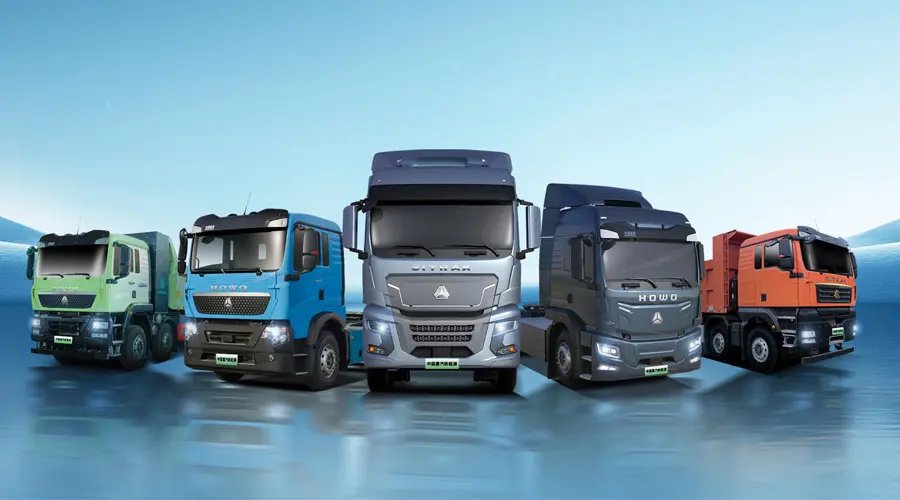
New Energy Commercial Vehicles Usher in a Cost-Driven Qualitative Shift
To understand CNHTC’s explosive growth, one must first understand the fundamental shift in the electrification of commercial vehicles: from a policy-driven phase of “having to replace” to a cost-driven phase of “losing money if not replacing.”
Looking back at the historical curve, from 2019 to 2021, the penetration rate of new energy commercial vehicles hovered around 3%, a standard policy pilot period; it jumped to 9% in 2022, 11% in 2023, and 20% in 2024. It was from 2024 onwards that the curve no longer rose slowly but steeply. By 2025, the annual penetration rate reached 29%. The penetration rate further increased to 31% from January to May 2026, with May alone reaching 39.3%, approaching 40%.
In his analysis article on June 18th, Cui Dongshu provided the core explanation: “The penetration rate of new energy vehicles for logistics vehicles with high fuel consumption and high taxes has increased significantly.” In other words, those who consume more fuel and pay more taxes are more willing to switch to new energy vehicles.

This is the fundamental logic that distinguishes commercial vehicles from passenger vehicles. Passenger vehicle consumers prioritize range, charging convenience, brand, and experience; emotional factors play a significant role.
Commercial vehicle buyers calculate return on investment. Take heavy-duty trucks as an example: a heavy-duty truck with an annual operating mileage of 150,000 kilometers and a diesel fuel consumption of 35-40 liters per 100 kilometers, at the current diesel price of 7.5 yuan/liter, would have annual fuel costs of approximately 400,000 yuan. A battery-swapping heavy-duty truck with a power consumption of 150-180 kWh per 100 kilometers, at an industrial electricity price of 0.6-0.8 yuan/kWh, would have annual electricity costs of approximately 140,000-170,000 yuan.
It’s worth mentioning that in May 2026, the penetration rate of new energy vehicles in China’s heavy-duty truck market reached 41.5%, a jump of 17 percentage points year-on-year, making it the segment with the greatest growth elasticity and the largest marginal contribution in the commercial vehicle industry.
Energy savings alone amount to over 200,000 yuan per year for an electric heavy-duty truck. Coupled with reduced maintenance costs due to simplified motor structures, the life-cycle cost advantage of an electric heavy-duty truck is no longer just “barely breaking even after policy subsidies,” but a genuine increase in operating profit.
With national scrapping and replacement subsidies and local road rights preferences on the purchase side, and the continuously widening price difference between oil and gas on the operation side, the electrification of commercial vehicles is shifting from “policy-driven” to “self-driven by cost-benefit analysis.”

In the commercial vehicle industry, the earliest, fastest, and highest-penetrating segment in terms of electrification transformation is light commercial vehicles. However, to see which segment can truly penetrate the new energy market from the core production scenarios, attention must be focused on heavy-duty trucks. This is why policymakers and the capital market are paying close attention to the much higher penetration rate of heavy-duty trucks compared to light commercial vehicles.
Industry analysts predict that the penetration rate of new energy heavy-duty trucks will reach at least 35% in 2026 and is expected to exceed 50% in 2027.
Clearly, the electrification of commercial vehicles has moved beyond the early mass adoption stage of the “crossing the chasm” theory and is now penetrating into the later mass adoption stage. During this penetration process, the underlying rules of competition are being rewritten.
China National Heavy Duty Truck Group (CNHTC) Takes the Lead, Systemic Strength Enters a Period of Explosive Growth
CNHTC’s explosive growth in new energy vehicles, judging solely from the numbers, seems unlike the rapid transformation of a traditional company.
Initially, the main players in the new energy heavy-duty truck market were emerging forces and cross-industry players who had made early investments. Until the first half of 2025, the new energy heavy-duty truck market was still dominated by these emerging forces.
The turning point came in the fourth quarter of 2025, when CNHTC broke into the top three. Subsequently, the pace accelerated dramatically. In March 2026, CNHTC won its first monthly championship in new energy heavy-duty truck sales; in April, it achieved a double crown, simultaneously topping the monthly and cumulative sales charts; and from January to May, its cumulative sales continued to hold the top spot in the industry.
Achieving catch-up, surpassing, and leading in just five months—this isn’t a shortcut, it’s a straight-line crushing victory. Many are puzzled: what made China National Heavy Duty Truck Group (CNHTC) so successful? The answer lies behind the numbers.
A few years ago, new energy heavy-duty trucks first appeared in atypical logistics scenarios such as closed mining areas, special-purpose vehicles, and urban construction. Players with strong engineering backgrounds, cross-industry players, and emerging forces quickly carved out a share of the market. More precisely, those who acted first secured the initial demonstration orders. At that time, users’ concerns were simple: “Can electric drive work? Is there policy support? Should I buy a few to try it out?”
As new energy heavy-duty trucks moved beyond the demonstration phase and entered the mass production phase, users’ concerns shifted to: “Is mass delivery reliable? Who will repair it if it breaks down? How long will it take to get parts? Who will cover battery degradation? What is the resale value? How about financing?” At this point, the advantages of traditional giants began to emerge, which explains why CNHTC was able to break into the top three in the fourth quarter of 2025.
As is well known, China National Heavy Duty Truck Group (CNHTC), which has maintained its leading position in the domestic heavy-duty truck market for many years and is poised to become the global sales champion in 2025, has accumulated a strong foundation of “strong technology, deep channels, familiar scenarios, high customer loyalty, and large manufacturing and supply chain throughput.”
This foundation became even more prominent in 2026, when new energy heavy-duty trucks began to enter a period of large-scale operation, and users focused on “the total cost of ownership (TCO) throughout the entire life cycle, accurate down to each vehicle, each kilowatt-hour, and each kilometer.” This is the core reason for CNHTC’s rapid rise to the top—its systemic advantages have entered a period of explosive growth.
In 2024, CNHTC systematically launched the S-CET “Blue Cube” new energy technology brand and platform, transforming key operational indicators such as “vehicle-electric integration, high-efficiency electric drive axles, battery thermal management, and IP6K9K/1.5m wading depth” into engineering realities for heavy-duty trucks, evolving its products from simply “being able to run” to “being able to compete.”
While leading the industry in technology and platform, China National Heavy Duty Truck Group (CNHTC)’s impressive performance in the new energy vehicle market is also attributed to its extensive channel and service network, supply chain and manufacturing costs, mature business model, and the increasing number of scenarios supporting the growth of new energy heavy-duty trucks.
CNHTC boasts over 1,200 dealers and more than 2,000 service outlets nationwide, forming a vast neural network that covers areas untouched by competitors, including many remote mining areas. For fleet owners, this means that after switching to CNHTC electric heavy-duty trucks, they can definitely find a repair shop within 300 kilometers—a competitive advantage that no new player can build in three or five years.
With annual production and sales exceeding 300,000 heavy-duty trucks, CNHTC’s scale gives it unparalleled bargaining power in battery procurement, electric drive axle assemblies, and chassis components, as well as superior manufacturing efficiency and quality consistency—qualities that companies producing and selling only 10,000-20,000 new energy heavy-duty trucks annually cannot match.
Since last year, the increasing demand for new energy heavy-duty trucks has been driven by the expanding use of previously closed application scenarios, from mining areas to railway distribution stations, from steel mills to downstream processing parks, the spread of construction waste from city centers to suburbs, and the increased demand for short-haul transport of Xinjiang coal.
These expanding scenarios share common characteristics: larger transport radii, routes extending beyond closed areas, and the need for not only dump trucks/mixers but also standard tractor units—perfectly entering China National Heavy Duty Truck Group’s (CNHTC) home turf. Market demand combined with CNHTC’s aforementioned advantages naturally led to a growth in sales. A mature business model further strengthens the appeal to buyers.
Commercial vehicles are a capital-intensive industry, and buyers inevitably weigh the pros and cons of a brand’s business model. CNHTC’s battery-swapping heavy-duty truck solution, while not a new concept, offers tangible guarantees for users: third-party operation of battery swapping stations, ensuring residual value through standardized battery technology, and a robust financial system to guarantee user cash flow.
There’s no “blockbuster product” logic in the electrification of commercial vehicles; it’s all about the endurance of “thousands upon thousands, tens of thousands, non-stop production.” In this logic, channel depth, quality systems, supply chain efficiency, and robust financial infrastructure are the true winning weapons.
China National Heavy Duty Truck Group (CNHTC) unexpectedly topped the industry rankings, seemingly a brilliant breakthrough in the new energy battlefield, but in reality, it’s a strategic leap forward achieved through the systemic capabilities accumulated during the gasoline era. This isn’t starting from scratch; it’s the strength and confidence to rewrite the rules of competition.
State-owned enterprises are not just old tickets; they are the ballast of the “dual-carbon” strategy.
There’s a common misconception in the narrative of commercial vehicle electrification: that established state-owned enterprises are too large to change course, and that the leaders in the new energy era should be like the new forces in the passenger car industry, or at least some cross-industry players.
But the facts refute this. From January to May 2026, traditional commercial vehicle companies accounted for over 70% of the compulsory traffic insurance registration data for new energy commercial vehicles. Brands like Sinotruk, FAW Jiefang, and Dongfeng, once synonymous with gasoline-powered vehicles, are now re-establishing their dominance in the new energy vehicle market.
The presence of these new players in the commercial vehicle sector is rapidly diminishing because the competitive nature of the commercial vehicle market differs drastically from that of passenger vehicles. Passenger vehicles possess consumer product attributes, allowing brand storytelling, community building, and OTA (Over-The-Air) updates to create competitive advantages. Commercial vehicles, however, are purely means of production; customers are only concerned with three things: price, range, and repair time. These are questions that established state-owned enterprises have answered for decades in the era of gasoline-powered vehicles.
More importantly, the “dual-carbon” value of new energy commercial vehicles far surpasses that of passenger vehicles. A diesel heavy-duty truck operating 150,000 kilometers annually emits approximately 140 tons of CO₂ equivalent annually, equivalent to the combined annual emissions of 70 gasoline-powered passenger cars. Replacing this diesel heavy-duty truck with an electric one is equivalent to electrifying all 70 private cars. In other words, the electrification of commercial vehicles is the main battleground and high-efficiency area for the “dual-carbon” strategy.
On June 12th, the “Implementation Plan for Promoting the Large-Scale Application of New Energy Heavy-Duty Trucks,” jointly issued by 11 departments including the Ministry of Transport, explicitly stated at the national level for the first time that by 2030, the penetration rate of new energy heavy-duty trucks should reach 40%, with a total fleet exceeding 1.6 million vehicles. The plan constructs a full-cycle support system around energy replenishment networks, mandatory application scenarios, and financial leverage, sending a clear signal: new energy heavy-duty trucks have been upgraded from “demonstration and encouragement” to a “national strategic infrastructure project.”
Those capable of undertaking this large-scale, project-level expansion must be the mainstays of the industry, possessing manufacturing scale, channel depth, and secure supply capabilities—this is precisely the historical position of state-owned backbone enterprises like China National Heavy Duty Truck Group (CNHTC).
The systemic capabilities forged by long-established state-owned enterprises through decades of hard work in steel, oil and gas, and soil are not magic tricks that can be conjured out of thin air by burning through financing for a few years. In 2025, CNHTC will become the world’s number one in total heavy-duty truck sales; less than six months later, it will also take the top spot domestically in new energy heavy-duty truck sales.
While the two trophies appear independent, their underlying logic is interconnected. It is precisely because of the deep-rooted strengths accumulated in channel networks, supply chain resilience, and manufacturing quality control during the era of gasoline-powered vehicles that these capabilities have been reused with astonishing efficiency in the era of electrification, transforming traditional “heavy assets” into a “significant advantage” in the new energy vehicle sector.
As the “dual-carbon” strategy enters its more complex phase, established state-owned enterprises are at the forefront of the new energy front. The national significance of this new energy transformation has long surpassed mere commercial success or failure. The ultimate goal of new energy vehicles is to truly achieve a green transformation for this industry, which accounts for 8% of the nation’s annual carbon emissions.
The commercial vehicle industry, capable of shouldering this great responsibility, undoubtedly includes established state-owned enterprises like China National Heavy Duty Truck Group (CNHTC). These are the nation’s pillars and main forces—those with sufficient scale, patience, and systemic depth, capable of sound economic calculations, and able to shoulder strategic responsibilities.